M.A.Z.E. Cord Blood Laboratories is offering readers of my blog a discount of $50 off of M.A.Z.E.’s state-of-the-art cord blood banking for the month of August. M.A.Z.E. is not offering this discount through any other blogs, just this one. Simply use discount code blog when registering.
M.A.Z.E. Cord Blood Laboratories sets the industry standard for cord blood banking and manages to provide the best quality cord blood banking at an affordable price. M.A.Z.E. does this by foregoing expensive advertising and promotional campaigns. M.A.Z.E. invests in the areas that most benefits parents, the processing and storage of their babies’ cord blood.
For additional information on the offer, you can call M.A.Z.E. at (914) 683-0000 or send an email to information@mazecordblood.com. This offer can not be combined with any other offer and is valid for 20 year registrations only. Registration forms may be submitted by mail, fax or email but must be postmarked or otherwise dated by 8/31/08.
Take advantage of this discount to get America’s best cord blood banking at an even lower price than usual.
|
August 4th, 2008
7287pwkr
Many cord blood banks (including M.A.Z.E. Cord Blood Laboratories) offer gift registries for parents who choose to bank their baby’s cord blood. These registries are a great way for parents to get assistance with paying for this life-saving opportunity. As we have mentioned in the past, cord blood banking is expensive (even with M.A.Z.E. which is less expensive than most other banks). Gift registries allow parents to receive assistance with paying for the bank without having to actually ask for the money.
M.A.Z.E.’s registry works like this…
Once parents have registered to bank their infant’s cord blood, they can go online and register for the gift registry. Once they have registered, we will send an email announcement out to those friends and family members the expectant mom (or dad) would like to reach. The email includes information on how to make a contribution. M.A.Z.E. keeps track of all contributions and informs parents who has given them a gift and how much. Once the baby is born, the parents’ credit card is charged for the remaining balance.
Different families take advantage of the gift registry at different levels. We have had some parents who have only contacted one or two people and received a couple of hundred dollars towards their banking. We have had many other parents who have had their entire cord blood banking paid for through gifts from friends and family.
If cord blood banking is something important to you, but you find it too expensive, a gift registry is a great way to bring it into economic range. If there are friends and family members that want to give you a gift, cord blood banking offers them that opportunity (without expensive shipping charges for those friends and family member who live far away).
If you are considering cord blood banking, ask your cord blood bank if they offer a gift registry. This might be a way to bring cord blood banking into range for many parents who otherwise could not afford it.
|
July 31st, 2008
7287pwkr
An amazing article appeared in one of the blogs from Discover magazine. Apparently, researchers have taken blood progenitor cells (found in cord blood and bone marrow) and used them to grow entire networks of blood vessels in mice. The cells were implanted in mice and within seven days, a “vigorous network” of blood vessels formed and began conducting blood.
All I can say is wow! This could eventually eliminate the need for things like angioplasty and maybe even bypass surgery. Since these are both difficult and dangerous surgeries, it would be so much better to just grow new blood vessels.
|
July 24th, 2008
7287pwkr
USA Today recently ran a story about a nine-month-old baby suffering from severe combined immunodeficiency. This prevents his body from producing enough T cells to fight off disease. the condition is often referred to as “bubble boy” disease because its victims are so vulnerable to infectious disease that they must live in protective bubbles.
Granton Bayless was admitted to the hospital in March, suffering from pneumonia and respiratory synctial virus. He was placed on a ventilator and given medicine to paralyze him so he wouldn’t hurt himself with the equipment.
Following an exhaustive search for a bone-marrow or cord-blood match, Granton finally received an umbilical cord blood transplant at Children’s Mercy Hospital in Kansas City, Mo. Cord blood was chosen because there was less of a chance that it would damage the surrounding tissue. Since the transplant, Granton’s recovery has been awe inspiring. A recent blood test showed that 86% of his white blood cells were donor cells. In addition, Granton is producing “natural killer cells,” which are important for fighting infection.
Risks still remain, particularly that the donor cells will begin to attack the baby’s own cells, but his parents are hopful. Since the treatment, Granton has gained weight, become more active, and even more importantly, his parents are able to hold him again.
Hopefully, this will become another happy ending brought about be an umbilical cord blood stem cell transplant.
|
July 22nd, 2008
7287pwkr
This post is not related to cord blood per se, but it is definitely interesting to the expectant parents who are reading.
Scientists at Baylor College of Medicine recently conducted a study with new mom’s to determine the effect on mom’s brain of her baby smiling, neutral, or crying. As any mother knows, the smile had an effect similar to that of a drug, triggering pleasure receptors in the brain typically associated with food, sex, or drug addiction.
This is a developmental adaptation to encourage mother’s to care for their children. The smile provides a physical reward for making the baby happy. After a long nine months, you have those fabulous gummy smiles to look forward to.
|
July 18th, 2008
7287pwkr
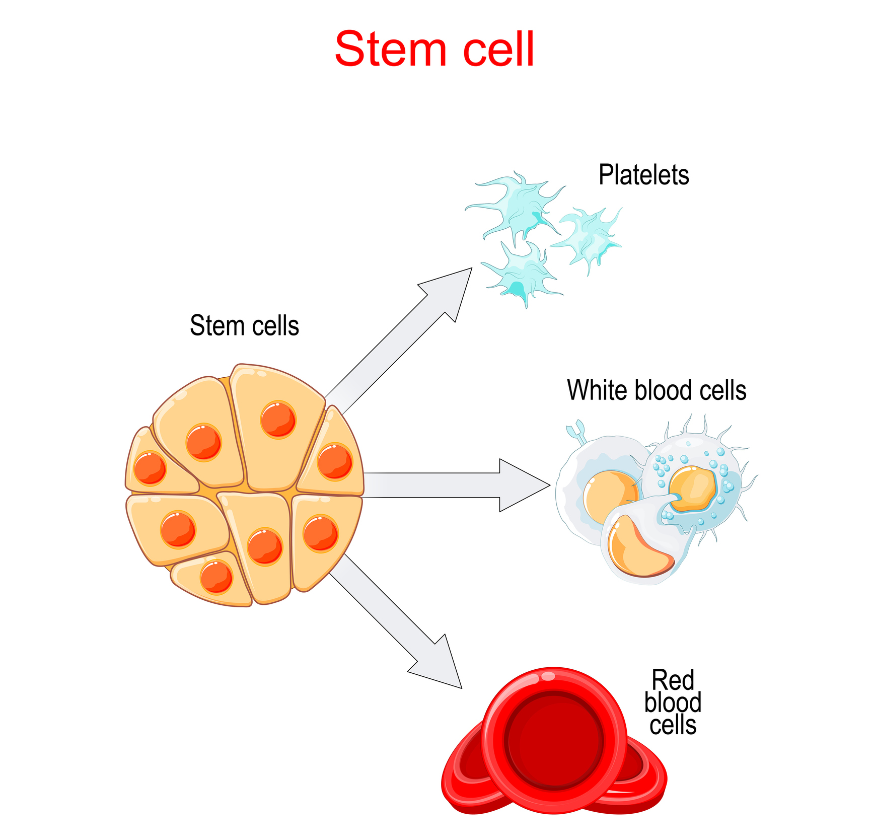
Stem cells are used to provide some amazing treatments for a number of different diseases. Problems arise when what would be referred to as “quacks” claim amazing, unproven treatments using stem cells. According to an article in Medical News Today, two pediatric eye surgeons recently expressed alarm over parents taking their children to mainland China for umbilical cord stem cell (CSC) transfusions. These treatments can cost up to $50,000 or more and parents are led to believe that this is an effective treatment for optic nerve hypoplasia (ONH), a disease causing partial blindness at birth.
According to the article, “Lawrence Tychsen, M.D., and Gregg Lueder, M.D., professors of ophthalmology and visual sciences at Washington University School of Medicine and pediatric ophthalmologists at St Louis Children’s Hospital, diagnose and treat dozens of children each year with ONH. They are concerned that the CSC reports will mislead many parents of children with ONH, who may bankrupt savings, go deeply into debt or organize fundraisers to pay for sham treatment.”
While parents have claimed improvement, there has been no objective documentation of improvement as a result of CSC treatments. Without scientific research, it is impossible to tell how much improvement is from the treatment, how much is from natural development, and how much is placebo from wanting the treatment to work. Besides the lack of evidence of these treatments working, the physicians are also concerned about the possibility of contamination for the injections.
This is an interesting article that really lays out the argument against these treatments. You can click here to read the entire article.
|
July 16th, 2008
7287pwkr
Occasionally we will receive questions from parents looking for information on using stem cells to treat diseases that are not on the list of approved treatments or even disorders that are being researched here in the U.S. I completely understand how these parents feel. If my children had some type of problem, I would do anything within my power to try to fix it. This need to help their children is driving many parents to explore unproven treatments overseas. This is often referred to as stem cell tourism.
Notice, I don’t say these parents are exploring experimental treatments. In my mind, experimental treatments are being conducted in licensed laboratories using the standard scientific method. These parents are traveling overseas to access treatments that have only anecdotal evidence that they work.
The problem with relying on anecdotal evidence is two-fold. First, since there is no control, there is no way to tell if any response is caused by the treatment or by other factors. A child may improve as he ages, even without treatment. The second concern is that without a scientific evaluation, parents might imagine the change because they want it so much. After spending $50,000 for a treatment, it is hard to imagine that it wouldnt have worked. Parents might see a change because they want it so much.
Parents need to be very careful when exploring treatment options for their children. One study that did explore one of the stem cell tourism treatments examined seven patients who had stem cell transplants for spinal cord injuries. Five of the patients had serious complications and none experienced significant improvement. While such a small study is not perfect, it demonstrates that parents need to do a lot of research and weigh the advantages and disadvantages carefully for any treatment, but especially treatments overseas that have no evidence backing their responses.
|
July 14th, 2008
7287pwkr
Researchers at Kansas State University are developing a method to deliver cancer drugs directly to the tumor, more efficiently and limiting side effects for the patient according to a press release sent out yesterday. Three respected scientists received a grant from the National Institute of Health.
Apparently, the stem cells these researchers are using have a homing ability to travel towards tumors and other pathological lesions. According to the release, “Hua is fabricating the nanoparticles and some of the small-molecule drugs for the research. The tiny capsules carrying the drugs are nanogels made up of two polymers. The nanogel has a dye molecule that allows the researchers to follow it through the body using a fluorescent microscope.”
“The nanogel capsules are loaded into a stem cell, which responds to proteins sent out by the cancer cells by homing to them, Hua said. As the stem cells reach the cancer tissues, another chemical that induces cell death of the stem cells will be administered — only stem cells are engineered to respond to this additional drug. This means that the nanogel-encapsulated drugs will be released from the stem cells directly at the cancer tissue.”
Hopefully, this research will eliminate some of the painful side effects that occur with chemotherapy.
|
July 11th, 2008
7287pwkr
This article appeared in local newspapers across the country through a news service called NAPS. I thought it provided an historical perspective for parents considering cord blood banking.
(NAPSI)-Since 1988, 14,000 umbilical cord blood (UCB) stem cell transplants have been performed to save patients’ lives in all parts of the world. And now, 20 years later, the medical community–along with the first UCB transplant recipient–is honoring the pioneering doctors who made these procedures possible.
During the 6thAnnual International Umbilical Cord Blood Transplantation Symposium, Matthew Farrow–the first human ever cured with a transplantation of UCB stem cells–paid tribute to three doctors whose work led to his treatment. Farrow was treated when he was 5 years old for Fanconi’s anemia, a fatal blood disorder.
Dr. Eliane Gluckman, M.D., who performed the procedure, was honored with Hal Broxmeyer, Ph.D., the researcher who first discovered that cord blood was a bountiful source of stem cells, and Joanne Kurtzberg, M.D., Farrow’s referring physician. Also, Lawrence Petz, M.D., who has organized the Symposium since its inception and edits www.cordbloodforum.org, received an award for his contributions to the field.
“I was aware that the transplant I was going to receive was a new type of treatment, and I wanted to try this method to help other people,” said Farrow. “I am so glad I did because it really was a stepping stone to many great things.”
Since Farrow’s treatment, UCB stem cells have been used to treat more than 70 diseases, which were originally treated with bone-marrow stem cell transplants. Transplantation was originally used for patients who did not have a matched adult donor for bone marrow, as recipients and donors do not need to share as close of a tissue (HLA) type match for cord blood transplantation.
With the demonstrated effectiveness of UCB transplantation in saving the lives of patients who could not otherwise be transplanted, the use of UCB has expanded to become the most frequently used source of stem cells for children throughout the United States and is also frequently used for adults.
At the symposium, cord blood patients recognized two additional pioneers. Pablo Rubinstein, M.D., was recognized for creating the first public cord blood bank by Stephen Sprague, a patient who was transplanted with a unit from this bank. John Wagner, M.D., was recognized for performing the first double cord blood transplantation by the recipient Jill Anderson.
The recognition of these doctors was one of the first events of the two-day symposium held in Los Angeles. More than 500 doctors and researchers from more than 30 countries around the world discussed recent achievements and discoveries in the field.
Dr. Gluckman said, “When we think that now it has treated so many people, we know it is something important that we need to have available for everybody.”
For a summary of current facts about umbilical cord blood transplantation, visit www.cordbloodforum.org.
Matthew Farrow, the first person cured by a cord blood transplant, honors the doctors who made his procedure possible.
|
July 10th, 2008
7287pwkr
As parents who have banked with us may remember, we sent out a letter last year, looking for children who were suffering from diabetes who had banked their cord blood. This was for a clinical trial taking place at the University of Florida. Preliminary results from this trial are now available and are looking positive. According to Dr. Michael Haller, an assistant professor of medicine at the University of Florida, “While this is a relatively small study we can confidently say this is safe, and we have seen metabolic and immunologic changes to suggest there may be benefit. It’s not curing diabetes, but this is a first step to help us learn more and get us moving in the right direction.”
This study demonstrates just one potential of cord blood banking. We were excited to help Dr. Haller recruit patients and we really believe in the potential of autologous cord blood treatments.
|
July 7th, 2008
7287pwkr
Previous Posts